Guest blog by local nutritionist
& veg box customer, Steph Ley
Don’t Toss the Tops! A Nutritionist's Guide to Maximising Nutrients from Your Sandy Lane Veg Box
About the author: Steph Ley (BSc, DipION, mANP, mGNC) is a registered nutritionist and founder of The Nutrition Advantage, specialising in workplace nutrition. She is also a regular Sandy Lane Farm box customer!
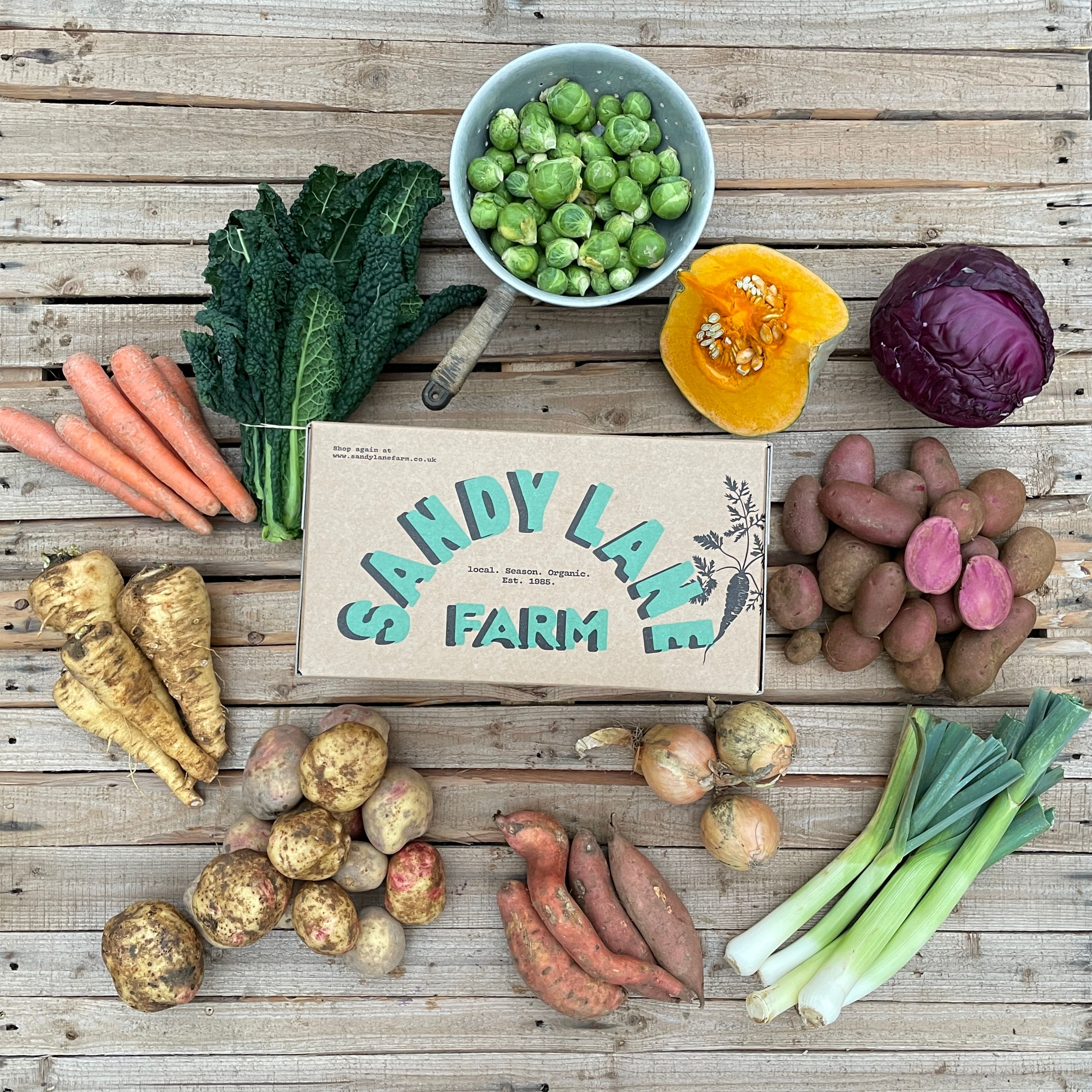
One of the genuine highlights of my week is coming back on a Thursday to the sight of my Sandy Lane Farm box waiting patiently for me on my doorstep (says a lot about my life!). I love unpacking the different colours and textures and thinking up the meals I can make with them.
There’s nothing quite as nourishing for our bodies (and souls) than enjoying fresh produce that has been grown locally, in line with the seasons, without the use of unnecessary chemicals.
But did you know that the way you store, prepare, and cook those beautiful vegetables can dramatically affect their nutritional value? As a registered nutritionist who's spent the past decade helping people get the most from their food, I'm excited to share some practical tips that will help you maximise every precious nutrient from your beautiful Sandy Lane Farm (SLF) veg box.
Keep the Skin On – That's Where the Good Stuff Lives
If I asked you why you peel your carrots, would you have a strong come-back?! For many of us, peeling our veg is just a learnt habit, but it’s one I have un-learnt! I genuinely don’t own a vegetable peeler. And this isn’t (just!) laziness; the truth is the most nutrient-dense part of many vegetables is the skin—often the bit we're taught to throw away.
The skin acts as a protective barrier, serving as the plant's primary defence system. This explains why the peel is often the richest source of protective antioxidants and phytonutrients, which the plant produces to ward off UV rays, pests, and other external stressors.
Research published in the British Journal of Nutrition shows that organic crops can contain up to 60% more key antioxidants than non-organic versions. Because these plants aren't treated with chemical pesticides, they are forced to produce higher levels of protective compounds in their skins as a way to defend themselves naturally.
Take squash and pumpkin, for example. The outer skin is so often discarded but contains the highest amounts of carotenoids in the whole squash. When roasted, the skin softens and develops a lovely "bite" that contrasts with the creamy flesh. These powerful antioxidants are linked to eye health and immune function. Simply give it a little wash, chop it into wedges, and roast it whole.
Figure 1 Don’t discard the goodness: Roast squash with the skin & seeds to retain all the antioxidants & minerals.
The same goes for carrots and potatoes—the peel contains high levels of polyphenols, Vitamin C, and fibre. I’m all over a good health hack that actually saves time too!
Don't Bin the Scraps!
And those mushroom stalks? Don't bin them! They contain just as much nutrition as the caps, including B vitamins and minerals like selenium. Chop them finely if the texture bothers you, but keep them in the pan. And if you peel mushrooms, please find a new hobby!
On this note, there are other parts of veggies I often see people flippantly putting in the compost bin while I scream a little inside! From the green tops of leeks (yes, they’re a little tough, but you're chucking away the highest concentration of Vitamin C, polyphenols, and folate found in the entire plant!) to the vibrant, iron-rich leaves on beetroot and the overlooked stalks of broccoli.I’ll always remember eating at one of the fanciest restaurants I've ever visited; for one of the courses, they served up literally just a steamed broccoli stalk! To be fair, it tasted pretty amazing—though I might have been slightly brainwashed by the price I was paying!
Keeping the "Goodness" Locked in with Suitable Storage
Proper storage is about far more than just avoiding a soggy bottom in your veg drawer; it is a vital step in preserving nutrient density. It helps to remember that once your Sandy Lane veggies are harvested, they are still technically "alive" and breathing—a process known as nutrient respiration.
If stored in the wrong conditions, vegetables begin to "breathe" too quickly, effectively burning through their own stored vitamins, sugars, and minerals to stay alive. When you see a potato sprout or a carrot go limp, you are seeing a plant that is exhausting its nutritional reserves.
By mastering a few simple storage rules, you can slow down this metabolic clock, locking in the antioxidants and ensuring the "Nature’s Goodness" you paid for actually makes it to your plate.
6 storage tips to help retain your vegetables’ nutrients
- The Friends that need to be kept apart: Potatoes & Onions
Keep these two in a cool, dark, and dry place—but never together. Onions release ethylene gas, which acts as a chemical signal that tells potatoes to start sprouting. When a potato sprouts, it converts its nutrient-dense starches into sugars to fuel growth, leaving you with a soft, nutritionally depleted spud.
- The Mushroom: "Breathable" Bag
Mushrooms are roughly 90% water and continue to "perspire" after being picked. In plastic, that moisture gets trapped, turning them slimy and destroying their delicate B vitamins. Store them in a paper bag (the one they come in at SLF is perfect!) in the main body of your fridge. The paper acts as a wick, absorbing excess moisture while allowing them to breathe.
- Broccoli: The Wet Blanket
Broccoli is a high-respiration vegetable, meaning it loses nutrients quickly if it dries out. To keep those florets crisp and packed with sulforaphane (a powerful antioxidant), wrap the unwashed head loosely in a damp paper towel and place it in a partially open bag in the crisper drawer.
- Carrots: The "Top-Off" Technique
Always remove the leafy green tops as soon as you get your Sandy Lane box home (though this has often been done for us!). Those greens are still trying to grow, so they will literally suck the moisture and minerals out of the carrot root to stay alive. Once "topped," store the roots in a sealed container in the crisper drawer with a damp paper towel.
- Tomatoes: Get them out the fridge!
Keep your Sandy Lane tomatoes on the counter. Cold temperatures can cause "chilling injuries" that break down the cell walls and halt the development of lycopene (the skin-protecting antioxidant). Room temperature ensures you get the full spectrum of flavour volatiles and health benefits so they taste better too!
- Soft Herbs: Treat Them Like a Bouquet
For maximum lifespan of fresh herbs such as parsley, coriander, or mint, snip the ends and stand them in a glass of water like a bouquet of flowers. This keeps them hydrated and prevents the antioxidant-rich oils from disappearing into the air. They also look pretty on my windowsill and I think this encourages me to use them more!
How to Cook for Maximum Nutrition
You’ve prepped and stored your veg perfectly, now don't lose the goodness at the finish line!
While we often think 'raw is best,' the science of cooking is more nuanced. Depending on the vegetable, the right cooking method can act like a key, unlocking nutrients that were previously trapped inside the plant’s cells.
Vitamin C is the "fragile" vitamin—it’s heat-sensitive and water-soluble (meaning it literally leaks out into cooking water).
· Raw: In regards to maintaining highest levels of Vitamin C, these veggie may be best eaten raw (you can’t beat a vibrant rainbow salad – your gut bugs agree!)
· Steaming: The gold standard if you’re cooking these veg. It preserves up to 90% of Vitamin C, whereas boiling can destroy up to 50%.
· Quick Stir-frying: The short cooking time helps maintain the nutrients vs. longer roasting or boiling.
· Go Large: Try to chop your veg after cooking or keep pieces large to reduce the surface area where nutrients can escape.
Surprisingly, some nutrients are "locked" behind tough cell walls that our digestion struggles to break down alone. This means cooking actually increases the nutritional content of these plants.
· Tomatoes: Heat is the key here. Slow-roasting those Sandy Lane tomatoes doesn’t just make an incredible pasta sauce; it breaks down the cell walls to release that powerful antioxidant lycopene.
· Carotenoids: Similarly, lightly cooking carrots and sweet potatoes makes their beta-carotene far more bioavailable (easier for your body to use).
Allicin, which is garlic’s superstar compound, isn’t actually present until the cell walls are damaged.
· The 10-Minute Rule: Crush, grate, or chop your garlic first, then let it sit for 10 minutes before it hits the heat. This "cell damage" is actually a chemical trigger that allows enzymes to create the allicin. When cooking with garlic I always try to remember to do this bit first when prepping my veg.
· The Finish: Add your garlic nearer the end of cooking. High, prolonged heat can destroy the very compounds you just worked so hard to create!
Fat Is Our Veggies’ Friend
Here's a nutrition principle that seems to surprise people: many of the most valuable nutrients in vegetables are fat-soluble, meaning your body can't actually absorb them unless fat is present.
Vitamins A, D, E, and K, along with carotenoids like beta-carotene and lycopene, all need fat to be absorbed properly. Without it, they'll pass right through your system.
The solution is deliciously simple:
- Drizzle melted butter over steamed carrots or sweet potato
- Serve Brussels Sprouts with toasted pine nuts or sliced almonds
- Toss roasted squash with coconut oil or lard before it goes in the oven
- Add some chorizo chunks to your cauliflower cheese
- Add a splash of cream to your leafy greens
- Dress your salad leaves with a proper vinaigrette made with extra virgin olive oil & add some chunks of avocado
- Serve broccoli & green beans with a quality beef steak!
You don't need much – even a teaspoon of fat can significantly boost nutrient absorption.
Traditional food pairings like butter on vegetables or olive oil on tomatoes aren't just delicious, they're actually nutritionally savvy!
Plus fat just makes everything taste better!
The "Eat-Me-First" List: Beating the Respiration Clock
The moment your Sandy Lane box arrives, a silent countdown begins. As mentioned above, even though your vegetables have been harvested, they are still technically "breathing"—a process known as respiration.
Because they are no longer attached to a root system, they cannot pull in new water or minerals. Instead, they must "burn" through their own stored nutrients to stay alive. The more aggressively a vegetable "breathes", the faster its nutritional density evaporates.
For example, spinach can lose up to 90% of its Vitamin C in just 24 hours if it’s allowed to wilt.
By understanding the Respiration Rate, you can prioritise the use of your SLF veg to ensure you are eating every vegetable as close to its nutritional peak as possible.
The Veg: Peas, Asparagus, Spinach, Sweetcorn, Mushrooms, Broccoli.
Respiration Rate: Extremely high
Optimum Eating Window: 2–3 days
The Veg: Green Beans, Cauliflower, Brussels Sprouts, Leafy Greens.
Respiration Rate: High
Optimum Eating Window: 4–7 days
The Veg: Lettuce, Cabbage, Tomatoes, Peppers, Carrots (tops off).
Respiration Rate: Moderate
Optimum Eating Window: 1-2 weeks
The Veg: Potatoes, Onions, Garlic, Winter Squash, Beetroot, Turnips.
Respiration Rate: Low
Optimum Eating Window: 1–6 Months
Example: Mushrooms have a very high respiration rate so they burn through their stored nutrients very quickly once harvested. Eat these within the first couple of days of getting your box to enjoy them at their nutritional peak.
How to "Slow the Clock"
· Keep it Cool: This is your most effective tool. For every 10°C drop in temperature, the respiration rate (and nutrient loss) usually cuts in half.
· Maintain Humidity: High-respiration veg tend to "exhale" moisture. Using your crisper drawer, brown bags or a damp paper towel keeps them hydrated and prevents wilting.
· Minimise Injury: Bruising or cutting triggers a "stress response", causing the plant to spike its respiration rate as it tries to "heal" itself. This is why a whole head of lettuce tends to outlast a pre-cut bag of salad.
The beautiful thing about Sandy Lane Farm's vegetables is that they start with incredible nutritional potential – these tips just help you preserve what nature (and careful farming) has already created. I would love to hear any tips you have, please share below.
Fancy sharing the love of nutrition with your team?
If you have enjoyed learning these science-backed tips for your veg box, why not bring that same burst of vitality into your workplace?
I am a Specialist Workplace Nutritionist focused on using the power of nutrition as a high performance tool for organisations. From interactive nutrition workshops to "Lunch & Learns” webinars, I help teams transform their energy levels, sharpen focus, and build a more resilient immune system to keep everyone feeling their best.
I’d love to help your team flourish through the power of real food. Click here to learn more about my Workplace Nutrition services.




© 2026 - Sandy Lane Farm
Powered by
