Looking back at 2022
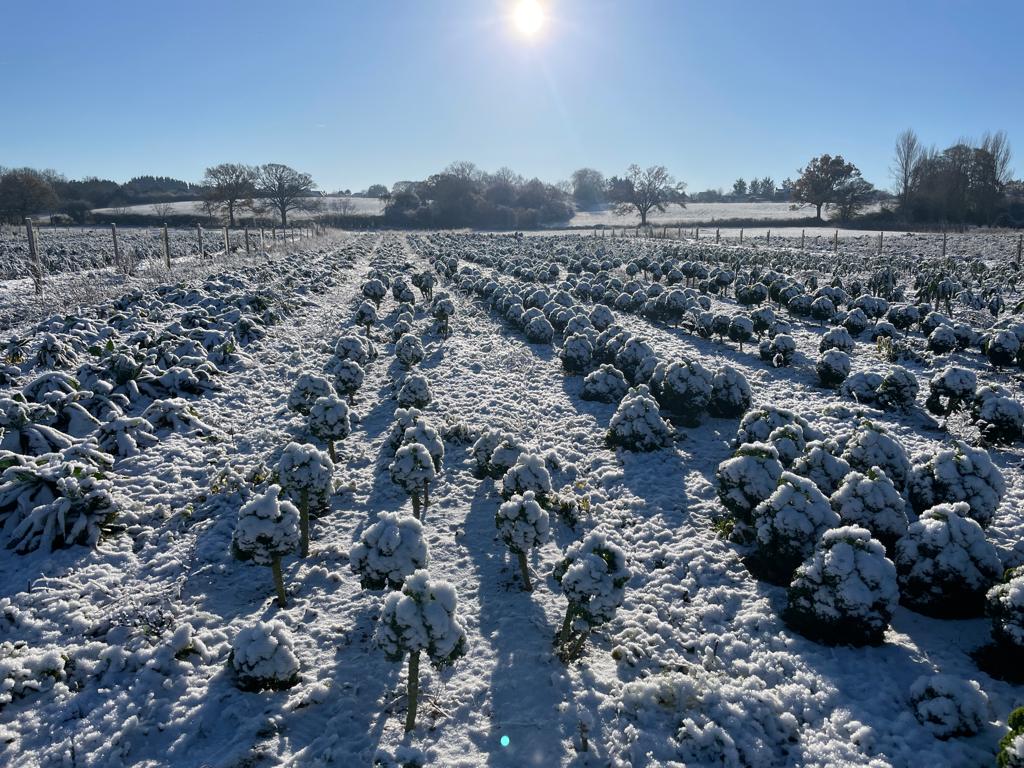
2022 had been a great growing year. However, it left us with a chilly sting in the tail.
The frost and freezing temperatures in early December seemed to come out of nowhere. The veg had basked in a very warm autumn and weren’t ready for the extreme cold. In a way, neither were we. As George recalled: ‘The temperatures suddenly dropped on a Wednesday - which is our veg box packing day, the busiest day of the week. I could suddenly see what was coming but there was no time to cover the fields. Next year, I’ll make sure we’re prepared with nets and fleeces and ready to act at a moment’s notice’.
It was easy to see the impact on the brassicas above ground, but the roots were harder to assess and it turns out that the damage is worse than George initially thought. The celeriac and beetroot froze solid and, after they’d thawed, were sadly inedible: ‘it’s shame to lose the celeriac in particular. Not because it’s a huge financial loss but because we try, wherever we can, to fill the boxes and shelves with our own veg and it’s a missed opportunity.’
While the cold came at a cost, George was ready for the heatwave and drought in July: ‘I felt like I’d been here before and had been stung waiting for the rain. This year, I didn’t wait and we managed to get basic irrigation down in time, which saved the crops.’ The success of the squash was a real relief. They were in a particularly dry field and, despite the fact they are a tropical plant and love the heat, the lack of rain could have been a real issue to this important harvest.
As ever, with no field scale irrigation on the farm and extended hotter periods on the horizon, it’s water that’s the main problem. With no natural water source on the farm to tap into, George is left with two options: ‘continue to pay huge amounts for mains water, which isn’t sustainable for us or the planet. Or, we need to invest in water capture and storage.’ Unfortunately, it is an expensive exercise and we’ll probably have to navigate a difficult few years before we can move forward. In the meantime, we will continue to make the most of the precious water we have with our organic practices and principles.
Looking back, if George had to pick his veggie ‘highlight’ of the year it would be the sensational Purple Sprouting Broccoli: ‘usually harvested in January time, this crop arrived totally by surprise brought on by the warm November. I’ve never seen anything like it before and probably never will again!’. And looking forward, a number of the fields are now in the 3rd year of their fertility building green manure (nitrogen fixing clovers) and look very promising: ‘3-4 years ago, dry spells conspired against making it hard to get the green manure established, which had a knock-on affect on fertility for at least 3 years but now, I’m hopeful we’ll see some really good crops from those fields’.
Due to the loss of the beetroot and celeriac, we’ve stumbled into the Hungry Gap (when the winter roots have gone and we’re still waiting for spring greens) a little earlier than we would have hoped. The next few months will be lean and there won’t be much to harvest from our fields. However, this time of the year is still hugely important to growers as we await our seed delivery, propagate like mad and, when the ground warms, get as much planted as possible. It’s also a good time to look ahead and accept that, if the weather is going to continue to throw us all curve balls, we need plans in place so we can move fast, adapt, think on our feet and try to work with the unpredictability as best we can. That way, hopefully, in 2023 we’ll bring you another great year of organic veg.




© 2026 - Sandy Lane Farm
Powered by
