
Serves
2 People
Cooking Time
10 minutes
Season
Dietary
How to cook Agretti
What is Agretti?
Agretti (also known as Salsola soda, barba di frate in Italian, or Monks Beard here in the UK) has an interesting history tied to both food and industry.
Originally native to coastal regions of the Mediterranean, agretti thrived in saline soils where few other plants could grow. Its name Salsola comes from sal, Latin for “salt.”
From the Renaissance through the 18th century, agretti wasn’t grown mainly for eating — it was cultivated for soda ash production. The plant was burned to extract sodium carbonate, a key ingredient in glass and soap making. This industry was especially important in Venice and Spain, where “barilla” (a similar plant group) fuelled the early glassmaking trade.
By the 19th century, when chemical processes replaced natural soda ash, agretti’s industrial role faded — but its culinary use persisted in Italy, especially around Rome and coastal regions. There, monks and farmers began valuing its tender, mineral-rich shoots as a spring delicacy, often sautéed with olive oil, lemon, or garlic.
Today, agretti is celebrated as a rare seasonal vegetable prized for its fresh, slightly salty flavor, succulent texture, and short harvest window, marking the arrival of spring in Italian markets.
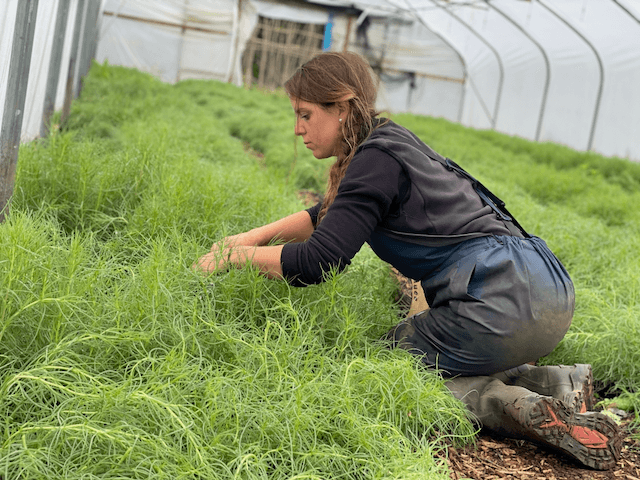
We grow agretti as a "cut and come again" vegetable in our polytunnels. This means our season is much longer than it is in Italy.
Preparation
We sell agretti in 150g bags at the beginning of the season, to 200g towards the end of the season, as there will be more tougher stems to remove as the season progresses
- Trim the roots and any tough ends.
- Rinse thoroughly — grit often hides in the stems.
- You’ll be left with fine, succulent green shoots that look like chives or samphire.
Cooking methods
My personal favourite is blanching, but there are a number of ways that you cook agretti. But always be careful not to overcook agretti - it can become quite unpleasant if it is cooked too long.
- Get a pot of water to a rolling boil
- Blanche your prepared agretti for 1 minute. ut in salted water for 2–3 minutes, until tender but still bright green.
- Drain and serve immediately
- Optionally: refresh in cold water to keep the colour vibrant.
- Dress with olive oil, lemon juice, and a pinch of salt — simple and perfect.
- Sauté briefly (2–3 minutes) in olive oil with garlic, then finish with lemon juice or vinegar.
- Excellent as a side dish or piled onto toast or pasta.
- Add blanched agretti to spaghetti with anchovies, garlic, and chili, or toss into farro or couscous salads.
- Works beautifully with poached or soft-boiled eggs, or as a bed for grilled fish or shellfish, balancing richness with its crisp, saline bite.
- Particularly at the beginning of the season, when it is at its most tender, it adds a lovely texture and flavour contrast in a leafy salad
Flavour pairings
Agretti loves:
- Citrus (lemon, orange)
- Anchovies, capers, olives
- Garlic, chili, parsley
- Eggs, shellfish, white fish
- Olive oil and vinegar







© 2026 - Sandy Lane Farm
Powered by
