
Serves
4 People
Cooking Time
20 minutes
Season
Dietary
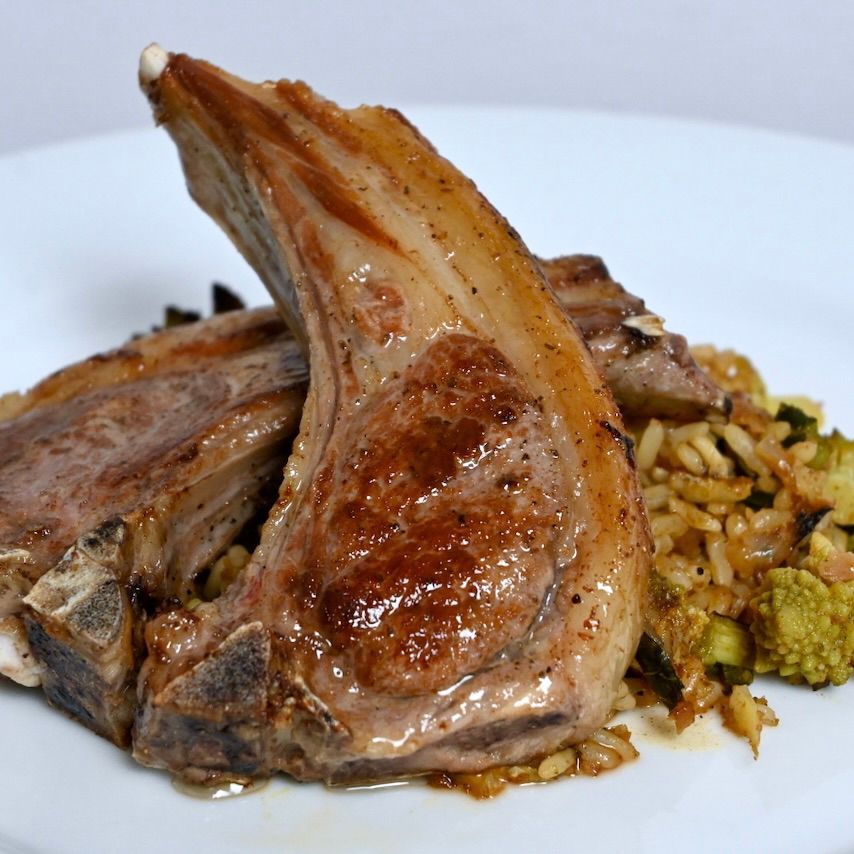
Lamb Cutlets
A guide to cooking:
September sees English Spring lamb ready for the table, making autumn & winter a delicious time of year to enjoy this British delight. Cutlets are small, tender chops cuts from the rib section, often called the ‘best end’, of the lamb. Each has an eye of meat, resembling fillet, attached to a rib bone, making them quick to cook, tender and full of flavour.
Cutlets can be tricky to cook as they comprise two types of muscle that require different cooking to get the best from them. Added to that the fat is not equally distributed, with an often thick cap running along the outside edge, plenty of intermuscular fat around the rib, then a lean eye.
The intercostal muscle around the rib is striated with fat, a hard working skeletal muscle that favours low slow cooking to render the fat, dissolve the connective tissue and tenderise the muscle fibres.
In contrast the eye is a lean little used muscle that takes very little cooking, ideal for fast steak like methods, with almost no fat running though. This paradox takes a little thought when it comes to cooking. The solution is simple and takes very little time.
Method:
1. A heavy based flat pan is ideal to evenly distribute and hold the heat. Begin by gently warming it over a medium heat.
2. Season the cutlets with salt and pepper, ensuring to season the fat as well.
3. Once the pan is warm, stand the cutlets upright with the thin fatty edge touching the dry pan. Cook like this for a few minutes until the fat begins to render and crispen. The fat will become slightly watery and more translucent in appearance. The rib meat will start to cook while the eye remains raw.
4. The rendered fat will lubricate the pan without the need to add any extra.
5. Turn the heat up to around two thirds, then knock the cutlets over on to their cut face and cook for 2 minutes.
6. Turn them over and continue to cook on the final side for another 2 minutes over the higher heat.
This second side cooking can be done in a hot oven (200°C) which helps to crispen the edges and render any fat that has not come in contact with the pan.
Finally rest the cutlets for a couple of minutes out of the hot pan, loosely covered with foil.
For a flamboyant flare, add a thumb of butter, a clove of garlic in its paper, and a sprig of rosemary to the pan when cooking on the final side. Baste the cutlet with the flavoured butter while it cooks, regularly spooning it over the cooked face.





© 2026 - Sandy Lane Farm
Powered by
