
Cooking Time
25 minutes
Season
Dietary
Spring Veg Kimchi
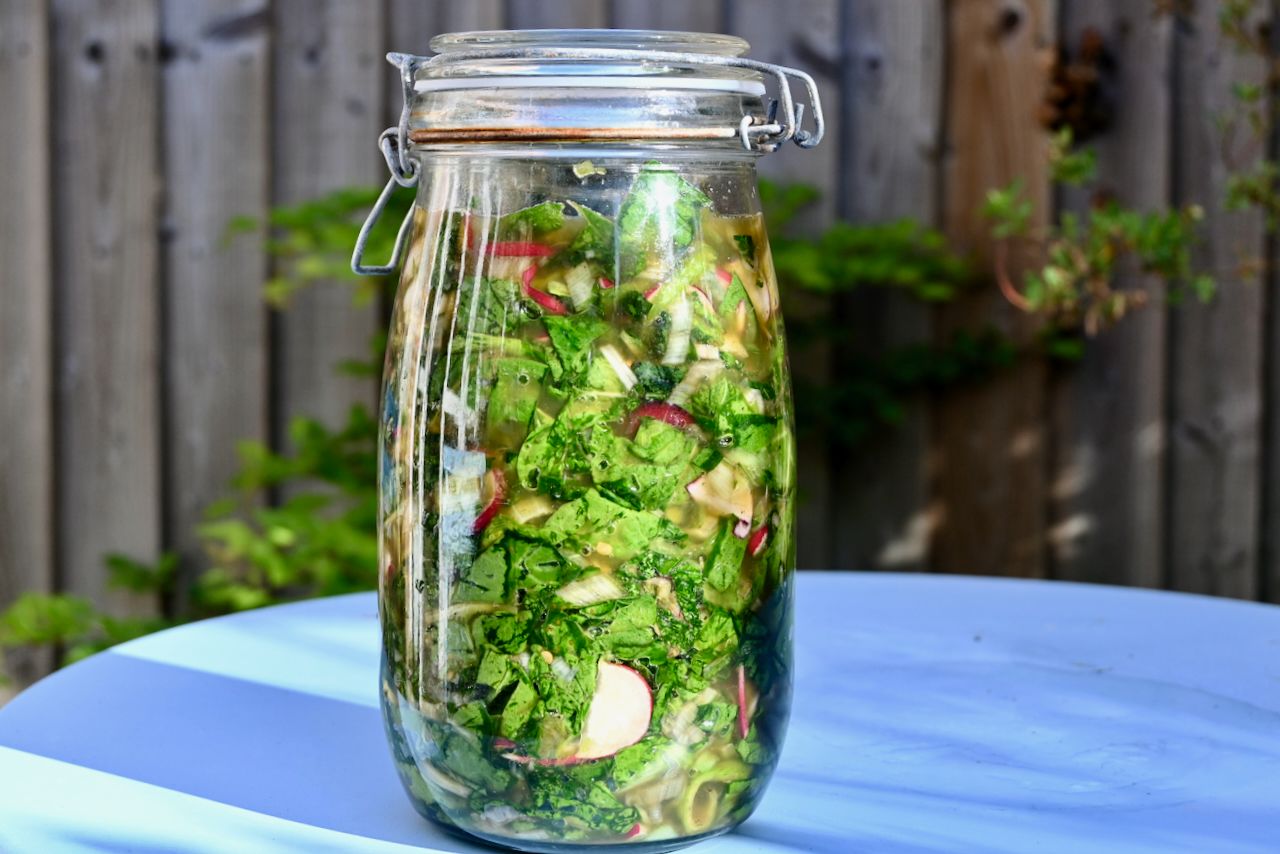
Hot & Sour Spring Ferment
Fermented foods have taken centre stage in recent years, none more so than Kimchi. A delicious balance between heat, sour and savoury designed to pair with blander or fatty foods so prevalent in the Korean diet. This does not mean that the ingredients have to remain Korean! The very ethos of most culinary cuisines is to make the most of seasonal availability, and a British spring has plenty to offer.
Choosing vegetables to make this ferment is not an exact science. However, taking a moment to balance their profiles will pay dividends when it is time to eat. Heat comes from chilli’s, in this case dried from September 2025 as George harvested the final crop from the polytunnels. Aside from chilli, the brassica family can bring some peppery heat, and radishes are hot off the press.
Rainbow chard is an all or nothing crop and perfect for fermenting with lots of texture, natural sugars in the stem and an iron rich savoury profile from the leaves. Chard is the bulk of this ‘kimchi’. The classical salty savoury flavours from the Eastern cuisine are classically derived from fermented fish or soy, but marmite is the UK’s answer.
Core to a good kimchi is the seasoning paste, get this right and the vegetables are easy to play around with.
Preparation time: 25 minutes
Salting time: 2 hours
Preserving time: 3 - 5 days depending on preference
Ingredients:
1 SLF bag of rainbow chard
Sea salt flakes
1 stem of fresh garlic
2 whole dried chilli’s
1 tablespoon of honey
½ teaspoon of marmite
1 bunch SLF radishes
1 bunch of spring onions or fresh garlic stems
(the last of the leeks are also a good alternative)
- The chard needs time to release it’s liquid with the salt. Weigh the chard first of all. Separate then shred the stems and the leaves. Measure 2% of the weight in salt and mix with the stems, leaving to sit for 1 and a half hours before adding the leaves.
- A kimchi is seasoned by its paste, this is where the heat and sweet is tweaked. Soak the dried chillies in a little water and the marmite for an hour, then chop and grind the garlic and honey with the rehydrated chilli and resulting liquid. I prefer to use a pestle and mortar to get the flavours going.
- While the chard is salting slice the radish and shred its leaves, slice the spring onion (or leeks) and weigh it. Mix with 2% salt and the paste, then season with some black pepper and any herbs you fancy.
- After the salting, mix well with everything else and pack tightly into a jar or fermenting vessel.
- If the mix is looking dry, add a brine made from water with 2% salt. The vegetables need to be almost submerged but not quite as they will continue to release liquid as the fermentation begins.
- Leave for at least 3 days at a consistent temperature. Ideally warm room temperature and away from sunlight. Burp daily.
- After 3 days taste the kimchi. Leaving it to ferment longer with deepen the flavour and the sour fermented nature. Stop this at any time by moving to the fridge.
Chef Notes:
What you’ll get (and how to tweak next time);
- Radish will stay crisp (good contrast)
- Chard will go silky and slightly tangy
- Garlic will mellow and sweeten
If it tastes:
- Too sharp → add a bit more sugar next batch
- Too flat → you need more salt or savoury
- Too bitter → more radish or a bit of carrot next time
Don’t be shy, if you under-season ferments you will end up with something dull. This should taste a bit too salty and punchy before it ferments — this turns into balance as the fermentation takes hold.





© 2026 - Sandy Lane Farm
Powered by
